


Page 47 - Porto da Beira/Port of Beira
P. 47
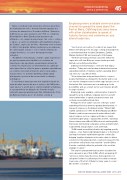
VENDAS E MARKETINGSALES & MARKETING45Talvez o resultado mais visível dos esforços proactivos de marketing tem sido o desenvolvimento gradual dos volumes de transporte no Corredor da Beira. “Quando a CdM iniciou as suas operações em 1998, os corredores Beira-Malawi e Beira-Zâmbia eram bastante sub- utilizados, com cargas de exportação, tais como o cobre e o tabaco, a serem encaminhados principalmente através de Durban”, explica Sr. de Vries. “Aumentar estes volumes foi difícil. Sem grande tráfego existiam poucas empresas de camionagem activas e, com o número limitado de cargas de retorno, os custos de transporte eramelevados.“A CdM virou esta situação, visando cargas específicas –as que trouxeram maior equilíbrio aos volumes de importação e de exportação encaminhados através do corredor. Ao reunir todos os intervenientes na cadeia de valor para oferecer soluções para os grandes exportadores, os volumes cresceram a tal ponto que foi alcançada a massa crítica, e o Corredor da Beira poderia utilizar plenamente o potencial da sua excelente localização estratégica.”O crescimento anual que tem sido mantido há mais de uma década é a prova de que os esforços da CdM está a valer a pena “e, assim que os clientes realizam a mudança, a sua experiência de utilização do Corredor é razão suficiente para que permaneçam fiéis utilizadores do Porto da Beira por muitos anos”, Sr. de Vries conclui. GEmploying every available communication channel to spread the word about the Port of Beira, CdM regularly joins forces with other stakeholders to speak at industry forums and conferences and attend trade fairs.“Just look at our location. It could not be clearer that Beira is the ideal port for all cargo coming and going from a vast hinterland that includes Zimbabwe, Zambia, Malawi, Eastern DRC and even parts of Botswana.“Yet there are many potential customers within the region who still view Beira as a mere feeder port with limited connectivity and facilities.”CdM has invested heavily to overcome that legacy mindset. “Today we boast modern infrastructure and an expanding network of mainline carriers operating direct call services,” says Mr. de Vries.“It has taken time and persistent effort to convince people that Beira has changed for the better and is now not only the cheapest route for their cargo but also one of the fastest. But customers are now waking up to the possibilities and, as a result, we’ve seen massive growth in cargo volumes.”Employing every available communication channel to spread the word, CdM also regularly joins forces with other stakeholders to speak at industry forums and conferences and attend trade fairs.Perhaps the most visible outcome of the pro-active marketing efforts has been the gradual development of transport volumes on the Beira Corridor. “When CdM started operations in 1998, the Beira–Malawi and Beira– Zambia corridors were very much under-utilised, with export cargoes such as copper and tobacco mainly routed through Durban,” explains Mr. de Vries. “Growing these volumes was difficult. Without much existing traffic there were few trucking companies active and with return loads limited, transportation costs were high.“CdM turned around that situation by targeting specific cargoes – ones that brought greater balance to the import and export volumes handled through the corridor. By bringing together all players in the value chain to deliver solutions for the large exporters, volumes increased to the point where critical mass was reached – and the Beira Corridor could fully utilise the potential of its excellent strategic location.”The year-on-year growth that has been sustained for over a decade is proof that CdM’s efforts are paying off, “and once clients make the move, their experience of using the Corridor is sufficient proof for them to remain loyal users of the Port of Beira for many years to come,” Mr. de Vries concludes. GPORT OF BEIRA PROFILE & DIRECTORY 2015 | 2016


